PRRR© Working notes / 04
A track day starts before the first corner
Pressures, brakes, temperatures and humility: what turns a circuit day into a valuable lesson.
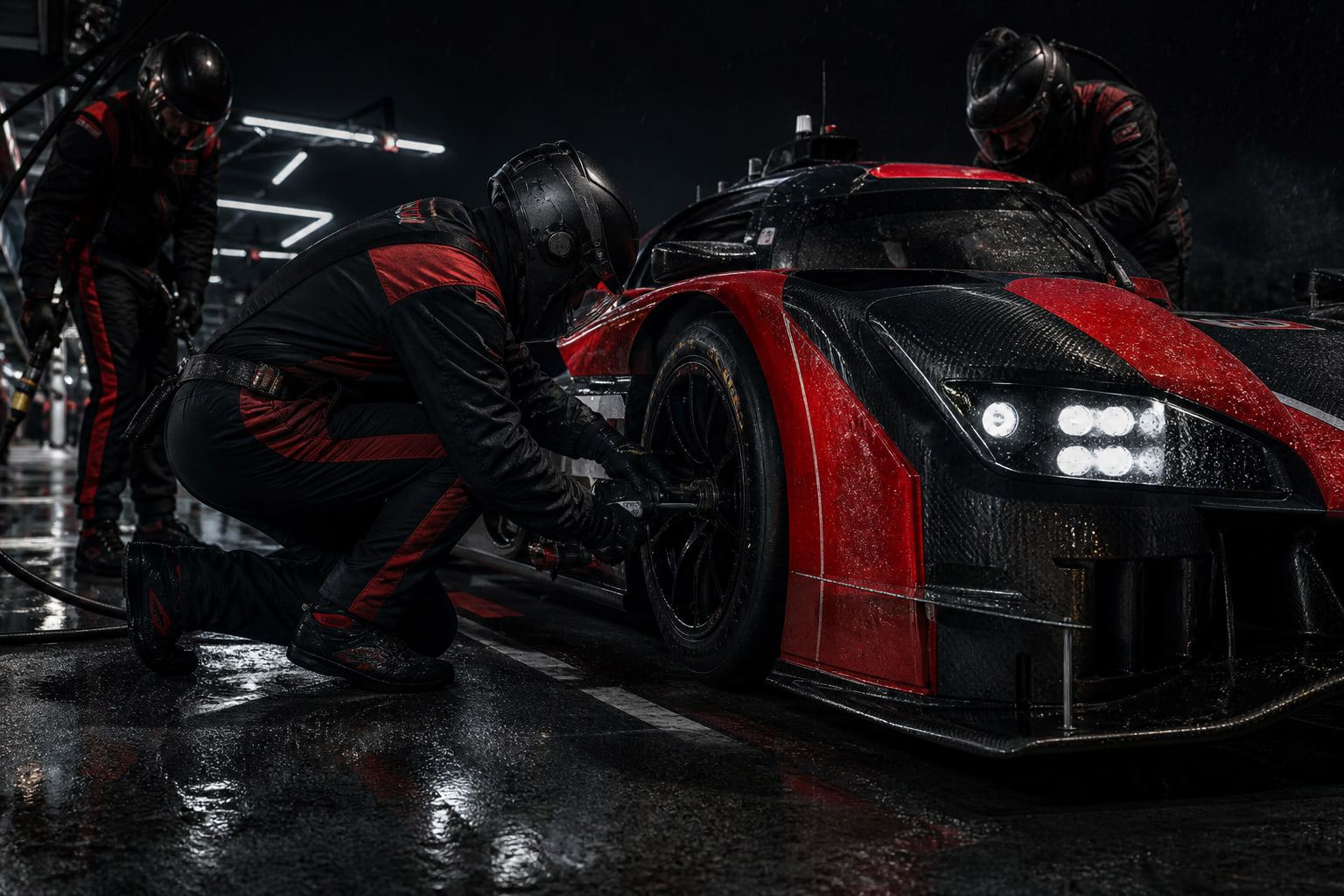
The most important lap of a track day happens while the car is standing still. Checking tyres, fluids, brake pads and wheel torque says more about a well-planned day than any lap time.
On circuit, habits that the road can hide become obvious: looking too close, braking late out of pride or trying to fix a poor entry with more steering. Something better appears too: the chance to repeat, compare and learn in a controlled environment.
Four simple ideas help make the most of it:
start slowly and build reliable references
check pressures, brakes and temperatures between sessions
let faster drivers through without turning it into a battle
finish with enough margin for both car and driver to go home intact.
Preparation: arrive with a simple plan
A useful track day begins with a realistic expectation. On a first visit, the objective may be to learn the circuit, understand the procedures and finish every session with the car in good condition. Trying to improve too many things at once spreads attention thinly. It is more productive to choose one reference: looking further ahead, stabilising braking or repeating a line. The plan should be specific enough to assess and flexible enough to change when fatigue, traffic or an unexpected mechanical condition appears.
The inspection beforehand deserves time and method. Undamaged tyres, correct fluid levels, sufficient brake material, wheels tightened to the specified torque and loose objects removed from the cabin form the foundation. Manufacturer recommendations and organiser rules also matter. Modifications do not automatically improve the experience; an extreme setup can reduce margin and make learning harder. A well-maintained standard car often provides clearer information than one altered without a complete understanding.
The briefing is part of the driving
Flags, access points, track limits, overtaking zones and exit procedures allow people with different levels of experience to share the circuit. Listening to the briefing is not an administrative step; it is the first safety decision of the day. Asking a question before entering prevents improvisation at speed and identifies who can help when a problem appears. A good participant understands the circuit as a coordinated environment rather than a place without rules.
Build references before looking for speed
The opening laps should be used for recognition. Where a wall ends, how the surface changes, which kerbs should be avoided and where the pit exit appears are more important references than the stopwatch. A stable pace helps the brain organise that information. If every lap changes completely, it becomes difficult to separate improvement from coincidence. Consistency is not the same as being slow; it is the foundation for understanding which entry creates a cleaner exit and which braking approach leaves the car better positioned.
Looking far ahead often creates the most immediate improvement. Vision guides the hands and prepares the next action before the car reaches a critical point. When the eyes remain trapped on the nearest apex, corrections multiply and continuity disappears. An instructor can identify that pattern quickly and save many laps of trial and error. Receiving one instruction, practising it for several laps and discussing it afterwards is more valuable than adding speed without understanding where it came from.
The stopwatch needs context
An isolated lap time says very little. Temperature, traffic, tyres and fuel alter the reference, and two equal laps may have been constructed in very different ways. Data helps when it answers a specific question: whether braking became more consistent, corrections were reduced or a gear produced a more stable exit. Used for understanding, the stopwatch becomes a tool. Used for comparison without context, it becomes a source of pressure that often makes technique worse.
Look after the car between sessions
The cool-down lap and the minutes afterwards belong to every session. Reducing the pace progressively allows temperatures to fall without suddenly stopping systems that have been working hard. Back in the paddock, checking pressures, looking for leaks and listening for new noises provides a basic picture of the car's condition. Recording changes helps reveal trends. Nothing needs to be dismantled; the aim is to build a habit of observation and stop when a signal does not make sense.
The driver also accumulates heat and fatigue. Drinking water, eating moderately, resting in shade and recognising when precision declines are performance measures as well as safety measures. The final session does not have to be the fastest. Sometimes the best choice is to finish early and preserve what was learned with one clear run. The circuit offers the possibility of returning another day; taking advantage of that possibility means not turning fatigue into a test of pride.
Leave with a question for next time
Learning continues after the helmet is put away. Reviewing notes, a recording or a small amount of data preserves sensations before they become mixed together. It is better to choose one improvement and one question than to write an endless list of errors. That summary turns the next visit into a continuation. A well-used track day does not end with an imaginary ranking, but with greater knowledge of the car, greater respect for the process and one clear question that invites a return.
A stopwatch can be useful, but the best measure remains another one: understanding the car better and leaving the final session with more judgement than you had in the first.