PRRR© Journal · Route 03
The road is culture too
Landscape, cities and new forms of mobility also shape how we see and experience the automobile.

Car culture does not live only in museums or major events. It also appears in a road chosen for its landscape, in the architecture framing a launch or in the way new technology changes our relationship with travel.
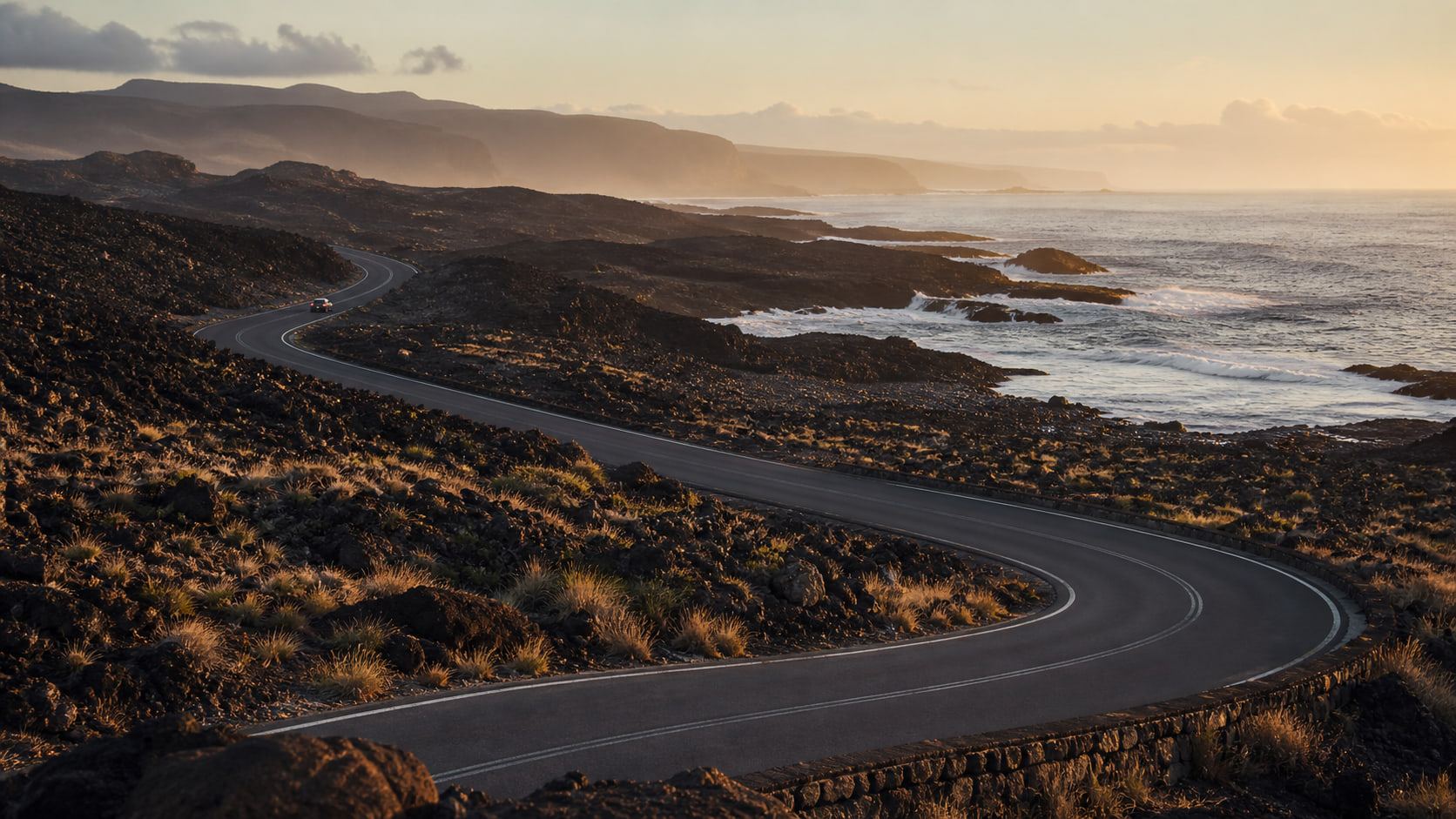
The automobile is a product, a space and a cultural object. Its design enters into dialogue with cities, landscapes and the people who use it. Seeing it this way lets us talk about mobility without losing emotion or judgement.
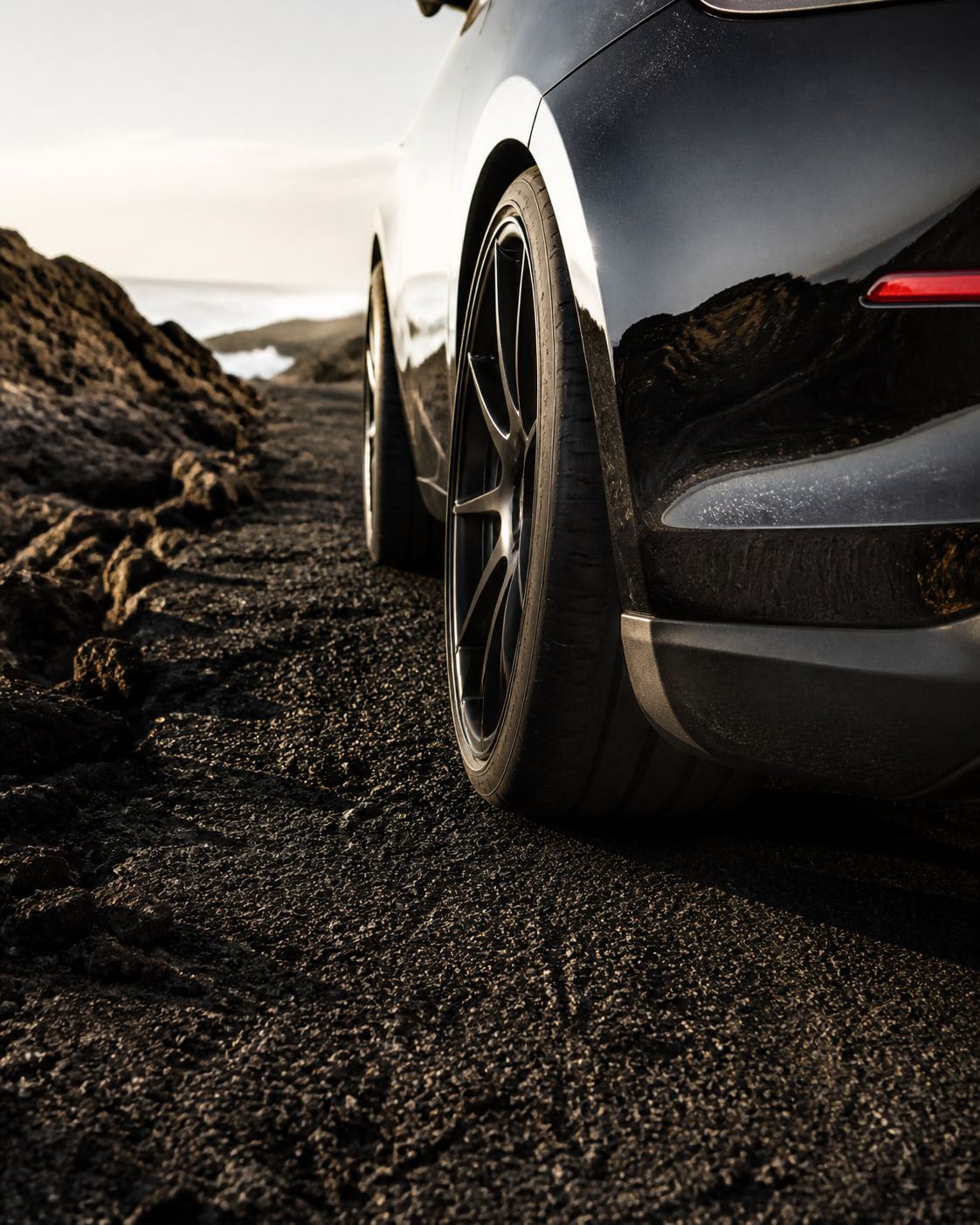
The road is a collective work
A road is never only a strip of asphalt. It condenses decisions about territory, economics, safety and access; it connects places while changing the way they are inhabited. Its route may follow the geography or impose itself upon it, bring a community closer or divert activity away from its centre. When we drive across a mountain pass, along a coast or through a historic avenue, we also travel through those decisions. The landscape seen from the car was shaped by many hands and belongs to many perspectives.
Understanding that dimension changes the familiar image of the automobile. The car stops appearing as an isolated object against an empty background and becomes part of a relationship. Architecture, signs, vegetation, climate and human movement affect how it is perceived. For a brand, this reading offers richer stories than a simple demonstration of performance. It creates space to discuss origin, materials, urban transformation or the desire to travel without treating the territory as a disposable set.
Looking at a landscape means recognising its limits
The most photogenic places are often the most fragile. A production, community drive or event can create noise, waste and pressure in spaces with limited capacity. Planning access, schedules, permissions and cleaning is part of creative direction rather than a secondary task. The final image gains legitimacy when the process respects the place that makes it possible. Car culture matures when it understands that preserving a road and its surroundings is a condition for continuing to enjoy them.
The automobile also builds language
The proportions of a body, the sound of a door and the graphics of an instrument panel speak about the cultural moment in which they were conceived. Some designs express technological optimism; others seek refuge, efficiency or continuity with a tradition. Those signals travel beyond the product. They appear in fashion, music, games, photography and architecture, where the car becomes a symbol of freedom, status, conflict or change. Reading it this way explains why certain models mean more than their function.
The relationship is not one-way. Cities, digital habits and new environmental expectations also transform the car. Interiors emerge as spaces for pause, interfaces learn from other devices and materials respond to a different sensibility. Automotive design has always absorbed outside ideas; its relevance depends on translating them with judgement rather than chasing every trend. A strong proposal recognises its context while retaining an identity capable of surviving after the novelty has disappeared.
Communities give machines their meaning
A vehicle gains new layers when it reaches the people who use, preserve, modify or document it. Clubs, workshops, collectors and creators develop their own vocabularies and retain knowledge that a campaign cannot manufacture instantly. Working with those communities requires listening and reciprocity. Borrowing their aesthetic is not enough; their experience must be recognised, their contribution paid and their genuine voice given space. Credibility appears when the relationship continues after the content has been published.
New mobility, different emotion
Electrification, connectivity and assisted driving alter sensations that seemed inseparable from the automobile for decades. Sound, power delivery and familiar rituals change. Emotion does not disappear, but it needs a different vocabulary. Silence can reveal the quality of a chassis or the surrounding landscape. Immediate response can make a road easier to read. Well-integrated charging plans can turn a stop into part of the journey instead of presenting it only as a limitation.
Communication has a responsibility not to replace one simplification with another. New technology does not automatically solve every mobility problem, and emotional connection does not belong only to the past. The interesting questions sit between those positions: what vehicle a context needs, how energy is used, what infrastructure exists and what experience a person receives. Speaking honestly about those tensions builds a more useful culture and allows design, pleasure and responsibility to share the same conversation.
Travel will remain a way of learning
Technology will change, but the desire to understand a place by moving through it will remain. Slow travel reveals distances, climates, economies and ways of life that a map reduces to a line. The car can support that learning when it does not completely isolate its occupants from what happens outside. Leaving room for stops, conversations and diversions restores depth to the journey. The road becomes culture when it stops being an interval between destinations and becomes an experience in its own right.